Commercial & Industrial
Solar Billing for Commercial & Industrial Properties
Cold storage, food processing, manufacturing, and warehouse/logistics tenants carry some of the highest electricity costs of any commercial use. Energy311 lets industrial landlords sell rooftop solar to those tenants at real utility rates, without locking either side into a 20-year PPA.
Billing at the current utility rate, instead of a fixed price, matters because energy prices are unpredictable and have historically risen faster than a fixed escalator can predict. A fixed rate that looks fair at signing can leave either side exposed for decades once actual rates move — the landlord absorbing the loss if prices rise faster than the escalator, the tenant overpaying for years if they rise slower. Billing against the market rate keeps every invoice tied to what electricity actually costs.
Best fit for industrial landlords and owner-operators with large-footprint tenants paying high electricity costs.
Talk to Energy311No solar on the roof? Energy311’s submetering solution bills C&I tenants fairly at real utility rates too — no solar required, and no utility rewiring the building. See how submeter billing works
$305K
Annual NOI, first year actual
3.1 yrs
Break-even after tax incentives
18.62%
Average ROI with ITC + depreciation
+$5M
Property value increase, year one
Turning a rooftop solar investment into $305K annual NOI — without a PPA
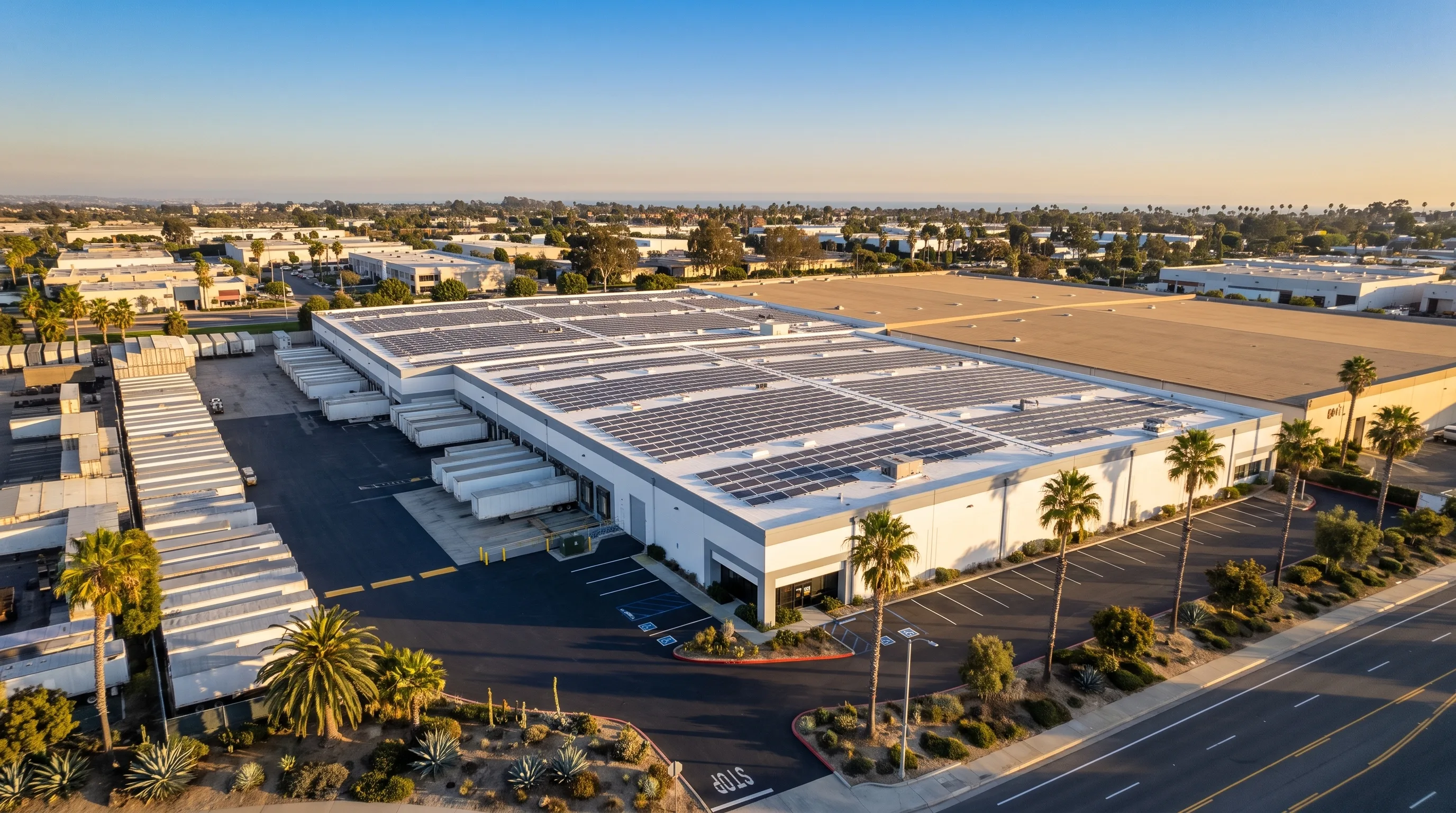
In 2017, an industrial property owner built one of the largest rooftop tracking solar systems in the world — 1.3 MW — on a cold storage facility leased to a national produce distributor in Southern California Edison territory. Electricity is the dominant operating cost in cold storage, and the project was designed to solve it: the property owner would own and operate the solar system, and the tenant would buy the power.
The default answer in the market was a Power Purchase Agreement — a fixed rate with a 3–5% annual escalator over 20 years. But a PPA left both sides exposed: the property owner would absorb the loss if utility rates rose faster than the escalator, the tenant would overpay for two decades if they rose slower, and neither side could adjust as their business changed.
Energy311 replaced the PPA with utility-rate billing. The property owner bills its tenant at actual SCE TOU-8 rates, calculated from revenue-grade meters and updated automatically every quarter — the same rates, structure, and accuracy the utility itself would use. Every invoice is itemized to match SCE’s format exactly, so it’s verifiable against the utility standard with no estimates and no disputes. The tenant also receives a $25,000/year discount off prevailing SCE rates as part of the lease arrangement.
The property owner’s total investment was $5,038,750, including a roof replacement. After the federal solar tax credit, bonus depreciation, and state depreciation, the net cost fell to $868,586 — the solar system effectively paid for the new roof. First-year billing revenue was $652,233, against $346,728 in pass-through grid fees, for $305,505 in net operating income, and the building’s value rose by $5M. Over 25 years at a conservative 5% annual rate escalator, the property owner projects $13.7 million in total solar revenue — utility-rate billing captured roughly 3× the revenue a fixed PPA would have over the same term.
“It was a no brainer. After the tax breaks, the solar system practically paid for itself, and we had a new warranted and maintained roof and solar system. Billing.Energy has made our transition to solar on our tenant-occupied buildings possible and profitable.”
Property Owner, Industrial Cold Storage Facility
What Energy311 handles for C&I properties
Meter
Revenue-grade metering measures solar production and grid consumption at interval level, so billing reflects actual usage rather than estimates.
Bill at utility rates
Invoices are calculated against the local utility’s current TOU rate schedule, including fees and taxes, and update automatically as rates change.
Collect
Itemized invoices in a utility-standard format mean tenants can verify their own bill, which keeps disputes and collections friction low.